


A chatbot powered by reams of data from the internet has passed exams at a U.S. law school after writing essays on topics ranging from constitutional law to taxation and torts.
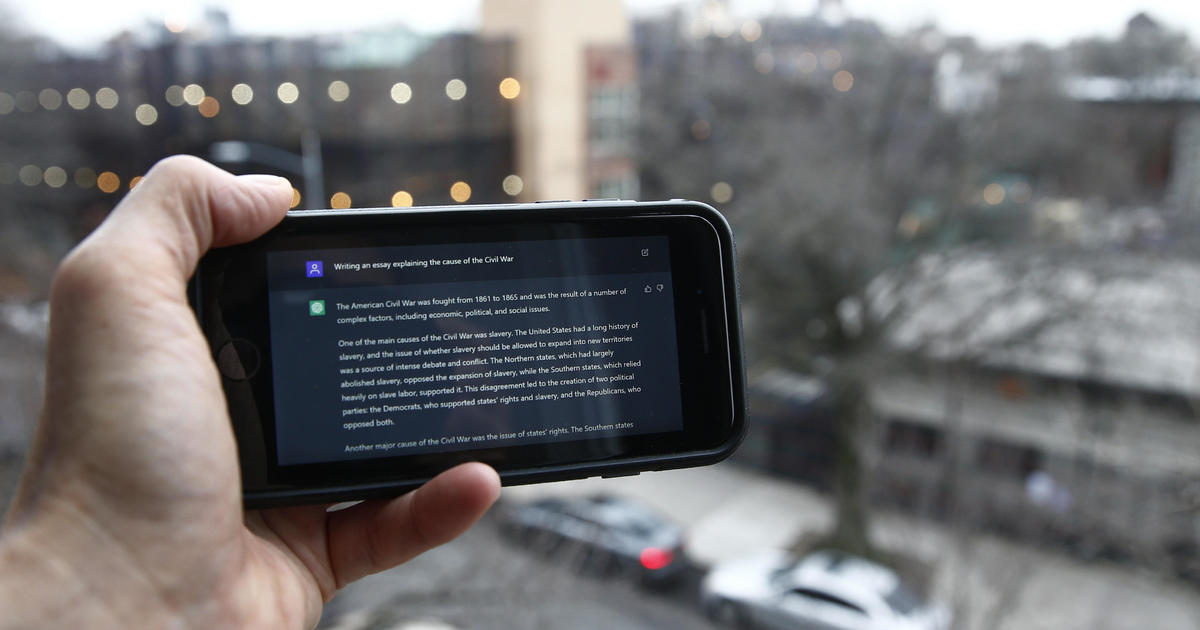
ChatGPT, from OpenAI - a U.S. company that this week got a massive injection of cash from Microsoft - uses artificial intelligence (AI) to generate streams of text from simple prompts.
The results have been so good that educators have warned it could lead to widespread cheating and even signal the end of traditional classroom teaching methods.
Jonathan Choi, a professor at Minnesota University Law School, gave ChatGPT the same test faced by students, consisting of 95 multiple-choice questions and 12 essay questions.
In a white paper titled "ChatGPT goes to law school" published on Monday, he and his coauthors reported that the bot scored a C+ overall.
While this was enough for a pass, the bot was near the bottom of the class in most subjects and "bombed" at multiple-choice questions involving mathematics.
"In writing essays, ChatGPT displayed a strong grasp of basic legal rules and had consistently solid organization and composition," the authors wrote.
But the bot "often struggled to spot issues when given an open-ended prompt, a core skill on law school exams."
Officials in New York and other jurisdictions have banned the use of ChatGPT in schools, but Choi suggested it could be a valuable teaching aide.
"Overall, ChatGPT wasn't a great law student acting alone," he wrote on Twitter.
"But we expect that collaborating with humans, language models like ChatGPT would be very useful to law students taking exams and to practicing lawyers."
And playing down the possibility of cheating, he wrote in reply to another Twitter user that two out of three markers had spotted the bot-written paper.
"(They) had a hunch and their hunch was right, because ChatGPT had perfect grammar and was somewhat repetitive," Choi wrote.
https://www.cbsnews.com/news/chatgpt-bot-passes-law-school-exam/
Sunny Hostin's claim that she was the lone holdout juror in the 1991 Daniel Rakowitz murder trial was contradicted by contemporaneous reporting from four news outlets. Hostin, a co-host of The View, stated on air that she single-handedly persuaded eleven fellow jurors to return a not-guilty-by-reason-of-insanity verdict in the case of the so-called Butcher of Tompkins Square Park.
Juror Valerie Holmes told the New York Post, the New York Daily News, and Newsday in February 1991 that the actual holdout was an unemployed man seeking to extend his $15-a-day juror fee and three free daily meals. A law enforcement source from the period also confirmed to the Post that the holdout was a man.
Fake court cases. Made-up quotes. Real consequences for the people in court.
A prosecutor’s work in Hannah Payne’s murder appeal included citations to cases that didn’t exist. The Georgia Supreme Court suspended her privilege to practice before that court for six months and required additional legal education. But what happens when fake AI citations appear in a judge’s own order?
I’m Nate the Lawyer, and we’re breaking down a Georgia prosecutor’s suspension, a Canadian lawyer’s use of nonexistent cases, and reports involving judges in Mississippi and Oklahoma. From a murder appeal to a child custody dispute, these examples raise a serious question: Are lawyers and judges being held to the same standard?
Watch the courtroom exchange, the news reports, and my breakdown of the accountability question.
Should judges face fines or suspension for citing fake cases? Tell me what you think in the comments.
CHAPTERS
00:00 Opening: Fake AI Cases Reach the Courtroom
01:14 Introduction: Who Is Checking ...
A Mississippi grand jury found no criminal wrongdoing in the death of Nolan Wells, a teenager whose body was recovered days after he went missing during a July 4th boat trip to Horn Island. The grand jury report concluded that Wells's death was consistent with drowning and that no individuals on the three boats involved, the Triton, the Palm Beach, and the Tide Line, engaged in any criminal conduct. The report disputed several widely circulated social media claims, including that Wells was the only Black person on Horn Island that day, that his phone was uniquely left on a boat, and that only one boat was available for his return to the mainland. Forensic experts noted bruising on the back of Wells's head but found no fatal injury; a witness testified Wells slipped off a boat around 3:30 p.m. on July 4th but continued socializing afterward. Wells's family, represented by attorneys, announced plans to release new phone evidence. Does the grand jury report answer the key questions in ...
And We’re Back!
And we're back, y'all. I appreciate every single one of you supporting the channel right here behind the paywall. You get the unvarnished analysis, the procedural realities, and the raw legal breakdowns before the mainstream algorithms try to throttle the reach, shadowban the facts, or bury the story.
The Inside Story of an 11-to-1 Jury Room
Today, we are diving into the exclusive sit-down interview with three jurors from the Lindsay Clancy trial who finally broke their silence—and what went down in that deliberation room is crazy, y'all!
Now, the public saw a hung jury mistrial. But when these jurors walked through what actually happened during deliberations, it wasn't some evenly divided debate over the facts.
It was 11 to 1 for Not Guilty by Reason of Insanity.
Eleven jurors were ready to sign the forms committing her to a state psychiatric facility. And the lone holdout? The other jurors revealed that he actually admitted during deliberations that he had reasonable doubt, but refused to vote not ...

And We’re Back!
And we're back, y'all. I appreciate every single one of you supporting the channel right here behind the paywall. You get the raw receipts, the unredacted files, and the unfiltered legal analysis before the algorithms try to throttle the reach, shadowban the facts, or bury the story.
The Narrative Completely Collapse
Today, we are diving right back into the Karmelo Anthony murder case out of Texas, and the newly leaked text messages published in full context by the Daily Mail are completely crazy, y'all!
Quick recap: Karmelo Anthony was convicted of murder and sentenced to 35 years in prison for fatally stabbing 17-year-old Austin Metcalf in the chest at a track meet. The internet immediately turned this into a massive, racially charged civil rights crusade. Activists rallied, social media commentators took up arms, and an online GiveSendGo fundraiser hauled in over $630,000 for his defense before it was pulled from public view.
Now, his legal team and family have launched a brand-new $250,000 legal defense ...

And We’re Back!
And we're back, y'all. I appreciate every single one of you supporting the channel right here behind the paywall. You get the raw receipts, the procedural breakdowns, and the unfiltered legal analysis before the algorithms try to throttle the reach, shadowban the facts, or bury the story.
The Mirror-Image Case Nobody Talked About
Today, we are looking at a case out of Linn County, Iowa, that is an absolute mirror image of the Lindsay Clancy tragedy—and the legal outcome on this one is crazy, y'all!
For the past year, social media and the legal commentary circuits have been arguing one specific talking point: "If a MAN had strangled his children and claimed psychosis or mental breakdown the way Lindsay Clancy did, he would be convicted of First-Degree Murder and sent to prison for life in two seconds flat."
Well, a man did do it. Almost a year after Lindsay Clancy strangled her three children in Massachusetts, 45-year-old insurance executive Matthew Schlier strangled his 5-year-old son, Jack, to death in Marion, ...